Showing posts with label Science. Show all posts

Thursday, May 29, 2008

Monkeys control robots with brain power


Scientists have trained monkeys to manipulate a robotic arm solely with brain power and could soon help amputees and paralysed stroke victims do the same.


Immobilised monkeys with electrode filaments inserted into their cerebral cortext learned within days to reach out with the free-standing prosthesis, pluck a tasty morsel with a pincer-like claw and pop it in their mouths.


When the path of the arm, positioned next to the shoulder, was deliberately blocked, the animals simply willed it around the obstacle with their minds.


Details of the research are published in the Nature journal.


Thursday, July 26, 2007

Saturday, July 21, 2007

Scientists make TV remote redundant with a wave of the hand

Barbara McMahon in Sydney
Friday July 20, 2007
Gaurdian Unlimited

A new device that allows viewers to operate the on/off switch or change channels by simple hand gestures may make the remote control lost down the back of the sofa a thing of the past.

Its inventors, two engineers from Wollongong University in Australia, say the new gadget incorporates a camera that recognises hand signals and translates them into electronic commands for the TV and other audiovisual equipment.

http://www.guardian.co.uk/australia/story/0,,2131226,00.html

Wednesday, December 06, 2006

Few own most of the world's assets: Study

Richest 2% of adults hold more than half of global household wealth, data reveals
Dec. 6, 2006. 01:00 AM
Olivia Ward
STAFF REPORTER

There's fierce debate about whether the rich are getting richer and the poor, poorer. But a pioneering study by the World Institute for Development Economics Research leaves no doubt the tiny fraction of the planet's population who are living in affluence own more than half of its wealth.

"The richest 2 per cent of adults in the world own more than half of global household wealth," says a study released yesterday by the Helsinki-based institute, a division of the United Nations University. "And the richest 1 per cent alone owned 40 per cent of global assets in the year 2000."

Some 37 million people worldwide have reached the top rung of the ladder, owning $500,000 (U.S.) in assets, after debts have been deducted.

"What's special about this project is that it puts personal assets into a global perspective," says University of Western Ontario economist James Davies, one of the authors. "It looks at the role of household assets and debts in relation to growth, and for the first time shows what the global distribution of assets looks like."

The study outlines the economic comfort — and discomfort — zone of people and countries by defining wealth as net worth: "the value of physical and financial assets less debts." And it says, "in this respect, wealth represents the ownership of capital."

Although the world's income gap has been amply confirmed, the gap in wealth is even more dramatic.

"Half the world has net worth per adult below $2,200," Davies says.

Not surprisingly, Canada is one of the handful of countries in which wealth is concentrated, though it is less affluent than the United States, the world's richest nation.

"Canada has 2 per cent of the wealthiest 10 per cent of people in the world," Davies points out. "As we only have 0.5 per cent of the world's population, we're right up there, and in fact, over-represented."

Canada has average per capita wealth of $89,252 and the U.S. $180,837, in terms of purchasing power. Japan, with $143,727, ranks just below the U.S.

While capital may be only a part of personal resources, "it is widely believed to have a disproportionate impact on household well-being and economic success, and more broadly, on economic development and growth," the study says.

The world's total household wealth amounted to $125 trillion in the year 2000, a sum which, averaged out, should give every adult $20,500. But in some countries, average per capita wealth was below $2,000, while the richest ranked many times higher.

Does the sharp division of the world's wealth mean that globalization has failed?

"Some people are certainly gaining from it, and others are suffering," says Davies. "We should not see globalization as necessarily reducing global inequality."

Tuesday, November 07, 2006

Australia's drought could be worst in 1,000 years

07 Nov 2006
Reuters
By James Grubel

CANBERRA, Nov 7 (Reuters) - The drought gripping Australia could be the worst in 1,000 years, government officials said on Tuesday, as Australia started to draw up emergency plans to secure long-term water supplies to towns and cities.

The drought affecting more than half of Australia's farmlands, already lasting more than five years, had previously been regarded as the worst in a century.

But officials from the Murray-Darling river basin commission told a water summit of national and state political leaders on Tuesday that analyses of the current prolonged drought now pointed to the driest period in 1,000 years.

"What we're seeing with this drought is a frightening glimpse of the future with global warming," the leader of the South Australian state government Mike Rann told reporters.

A spokeswoman for the Murray-Darling Basin Commission said the current consecutive years of drought had not been observed in the 114 years since records were first kept.

She said mathematical and probability analyses of the current dry spell found Australia was moving into what was possibly a one-in-1,000-year drought.

"We don't have the records to substantiate a one-in-100-year drought any more -- it's beyond that," she told Reuters.

Lack of winter rain has meant record-low inflows into the Murray-Darling river system, which drains an area the size of France and Spain combined and provides water to Australia's major agricultural areas.

The average inflow of water into the Murray River, which flows through three states, is 11,000 gigalitres a year. In the past five months it has received less than 600 gigalitres. One gigalitre is one billion litres.

Green groups have warned that towns and cities along the river system could run out of water if the drought goes into another year.

Prime Minister John Howard used the water summit to announce moves to investigate how to secure log-term water supplies for towns and cities along the Murray River.

The summit also approved a new weir across the Murray to provide emergency water, if needed, for the South Australian capital of Adelaide, a city of about one million people, which draws 40 percent of its drinking water from the Murray River.

But Howard, who remains sceptical about the impact of global warming, declined to publicly declare the drought the worst in 1,000 years. "All I know it is a very bad drought. It is the worst in living memory," Howard told reporters.

The Australian Democrats party criticised the summit, saying the meeting had ignored both the need to buy water back from farmers and irrigators, and the need to put a higher price on water use.

"Making water more expensive is not going to be popular, but it needs to be done," Democrats Senator Andrew Bartlett told reporters.

The Murray-Darling catchment covers 1.06 million sq km (409,000 sq miles), 15 percent of Australia's landmass, and accounts for 41 percent of Australia's agricultural production and A$22 billion worth of the nation's agricultural exports.

Monday, November 06, 2006

Heat to soar in NSW, says CSIRO

November 6, 2006

Average temperatures in NSW could soar by up to 6.4 degrees by 2070 unless action is taken to tackle climate change, new research by the CSIRO shows.

The study also warns that annual rainfall in key farming areas could drop by 70 per cent in the next 64 years.

The NSW Government, which commissioned the research, seized on the figures to attack Prime Minister John Howard's refusal to sign up for a national emissions trading scheme.

NSW Premier Morris Iemma said climate change was a real threat to the state's way of life.

"The CSIRO research paints a frightening picture; that's why we need a national approach to climate change," he said.

Under the emissions trading scheme proposed by the states, greenhouse gas emissions from Australia's electricity industry would be capped at between 1997 and 2000 levels by 2035.

Electricity generators would be required to hold permits to emit greenhouse gases but would be able to purchase extra permits and offset emissions through forestry and capturing or storing carbon.

"To our national shame, John Howard refuses to sign up in the face of overwhelming evidence of the impact of climate change on families and the economy," Mr Iemma said.

The new research also predicts that summer temperatures in inland northern NSW could be up to 7.1 degrees higher by 2070 and that spring rainfall could be up to 60 per cent lower.

Further climate change studies covering all of the major catchment areas in NSW will be released in the coming months.

The State Government is also funding research into the effect of climate change on rainfall patterns, water availability and flooding in the greater metropolitan region.

AAP

Friday, November 03, 2006

Study: 90% of the ocean's edible species may be gone by 2048

2nd Nov 2006
By Elizabeth Weise,
USA TODAY

Ninety percent of the fish and shellfish species that are hauled from the ocean to feed people worldwide may be gone by 2048, according to a report in Friday's edition of the journal Science.

Even now, 29% of those species have "collapsed," meaning a 90% decline in the amount being fished from the sea, says Boris Worm, lead author and a professor of marine conservation biology at Dalhousie University in Halifax, Canada.

"It is a very clear trend, and it is accelerating," Worm says. The paper represents four years of work by an international team of researchers at various universities who analyzed oceans species diversity over the past 1,000 years.

Overfishing is a big part of the problem. "Every year it's estimated that human beings remove 150 million metric tons of life from the seas," says Joshua Reichert, environment-program director at Pew Charitable Trusts in Philadelphia.

But fishing isn't the only problem, the report states. Destruction of coastal areas, estuaries and reefs by dredging, building and pollution destroys nursery habitats for young fish. Global warming and the changes in water temperature and salinity are thought to play a role.

As marine species disappear, the ability of others to survive is further harmed by the drop in the ocean's overall productivity and stability, the researchers found.

"Through this research, it became clear to me that we hardly appreciate living on a blue planet," Worm says. "The oceans define our planet, and their fate may to a large extent determine our fate, now and in the future."

Fish and seafood are key protein sources for a world that's expected to add another 3 billion people by 2050. But it's also problem for people who don't eat fish. Sixty percent of Americans live within 60 miles of a coast. Declines in marine biodiversity can:

•Increase coastal flooding because of loss of floodplains and erosion control provided by the wetlands, reefs and underwater vegetation that have a symbiotic relationship with marine life.

•Reduce water quality by destroying the plankton, plants and shellfish that are the ocean's biological filtering ability. A single oyster, for example, can filter 50 gallons of water a day.

•Increase beach closure because of harmful algae blooms, such as red tide, facilitated by the diminished filtering.

The good news is that it's not too late to turn this around, Worm says. When marine ecosystems are protected, the trend can be reversed, he says. Scientists studied 48 areas worldwide that have been safeguarded and report dramatic recoveries in the variety of species and stability of the ecosystem.

"We know how to do this. But it must be done soon," he says. "With each species that is lost, the opportunity for the system to repair itself is diminished."

Saturday, October 28, 2006

A look at the Nobel Peace prize winning Grameen Bank

The Associated Press
13 OCTOBER, 2006

The Grameen Bank, together with its founder Muhammad Yunus, won the 2006 Nobel Peace for pioneering the use of microcredit, the extension of small loans to benefit poor entrepreneurs.

WHAT IS IT: The Grameen Bank hands out microcredit, or very small loans, to the poor of Bangladesh who do not qualify for loans from conventional banks. No collateral is needed and repayment is based on an honor system.

HOW DID IT START: In 1974, Yunus, then an economics professor recently returned from the United States, lent a total of US$27 to 42 villagers who made bamboo furniture. The loans, which were all paid back, allowed them to cut out the middlemen and purchase their own raw materials. Emboldened by his experiment, Yunus won government approval in 1983 to open Grameen, Bengali for "rural."

WHY DO IT: Microcredit proponents believe these small loans are an effective means of alleviating poverty and stimulate the economy from the bottom up.

WHO QUALIFIES: Anyone can qualify, but they must belong to a five-member group. Once the first two members begin to pay back their loans, the others can get theirs. While there is no group responsibility for returning the loans, the bank believes it creates a sense of social responsibility, ensuring all members pay pack their loans.

DOES IT WORK: Grameen claims a 99 percent repayment rate. According to a recent Grameen survey, 58 percent of the families of Grameen borrowers have crossed the poverty line.

WHO OWNS THE BANK: The government of Bangladesh owns 6 percent of the bank while the borrowers own the other 94 percent.

WHAT ARE THE NUMBERS: The bank has handed out US$ 5.72 billion (€4.56 billion) since its inception to 6.61 million people and been repaid US$ 5.07 billion (€4.04). Women account for 97 percent of the loan takers. Grameen Bank has 2,226 branches, works in 71,371 villages and has a total staff of 18,795.

WHAT THE CRITICS SAY: Critics are skeptical about the 99 percent repayment figure and charge that the system leads to the borrower becoming dependent on the loans. Yunus has also been criticized for the level of interest rates that climb as high as 20 percent for loans to businesses that generate income.

Wednesday, August 30, 2006

Tuesday, August 22, 2006

Dark matter exists

By Robert Roy Britt
Monday, August 21, 2006

Scientists found proof of dark matter in galaxy cluster 1E0657-556

Harvard-Smithsonian Center for Astrophysics
National Aeronautics and Space Administration (NASA)
University of Arizona

New observations of a great big cosmic collision provide the best evidence yet that invisible and mysterious dark matter really does exist.

The collision, between two huge clusters of galaxies, is the "most energetic cosmic event, besides the Big Bang, that we know about," said Maxim Markevitch of the Harvard-Smithsonian Center for Astrophysics in Cambridge, Massachusetts.

The impact split normal matter and dark matter apart, rendering the dark matter's gravitational presence observable.

Scientists announced the discovery today in a teleconference with reporters.

The normal matter in the cosmos -- atoms that make up stars, planets, air and life -- accounts for only a small fraction of what must exist, based on the fact that without an additional source of gravity, galaxies would fly apart and galaxy clusters could not hold together as they do.

Nobody knows where all that gravity comes from, so scientists say there must be some invisible stuff out there, which they call dark matter. Its presence is indirectly supported by many observations.

Given what's known, this is the makeup of the universe:

5 percent normal matter

25 percent dark matter

70 percent dark energy

Dark energy is an even more mysterious phenomenon, a force of some sort that beats out gravity and is causing the universe to expand at an ever-faster pace.

Some theorists have suggested that rather than invoking dark matter, perhaps existing ideas about gravity might be wrong. Maybe gravity is stronger on intergalactic scales than what is predicted by Newton and Einstein.

And all astronomers agree that dark matter is such an exotic idea as to border on the crazy.
"A universe that's dominated by dark stuff seems preposterous, so we wanted to test whether there were any basic flaws in our thinking," said Doug Clowe of the University of Arizona at Tucson, and leader of the study. "These results are direct proof that dark matter exists."
Splitting matter

Clowe and colleagues used NASA's Chandra X-ray Observatory to study the galaxy cluster 1E0657-556, which contains a bullet-shaped cloud of superheated gas. X-rays show the shape was produced by cosmic winds created in a high-speed collision of two clusters of galaxies.

Other telescopes were used to locate and quantify the mass in the clusters. They actually measured the effect of gravitational lensing, in which gravity from the clusters distorts light from thousands of background galaxies, as predicted by Einstein's theory of general relativity.

The dark matter is not seen, but its gravity has a predictable effect on the observations. The resulting blue color in a new image represents the gravity fields observed by noting how the light from each background galaxy is distorted.

Here's what the image reveals:

The hot gas -- normal matter -- was slowed by a drag force described as the cosmic equivalent of air resistance. But the dark matter was not slowed by this effect, presumably because it does not interact with normal matter, as theory had predicted.

So the normal matter and dark matter became separated.

"This proves in a simple and direct way that dark matter exists." Markevitch said in the teleconference.

Other theories must cope

The finding provides further evidence that standard Newtonian gravity, which keeps planets in orbit around the sun, is the glue that makes things stick on the largest scales, too.

It is still possible there is some modification of gravity going on, but these findings make it less necessary to have such theories, said Sean Carroll, a cosmologist at the University of Chicago who was not involved with the study. "No matter what you do [in devising new theories] you're going to have to believe in dark matter."

"We've closed this loophole about gravity, and we've come closer than ever to seeing this invisible matter," Clowe said. "This is the first time we've had a direct detection of dark matter" in which you can't explain the results with any altered-gravity theory, he said.

The findings will be detailed in an upcoming issue of the Astrophysical Journal Letters.

Sunday, August 20, 2006

Abbott lashes out at scientists

August 20, 2006

Scientists are "peddling" hopes of medical breakthroughs without convincing evidence that expanding stem cell research will deliver, Health Minister Tony Abbott says.

Mr Abbott, who is strongly opposed to therapeutic cloning, today lashed out at "evangelical" scientists, accusing them of giving false hopes to sufferers of crippling diseases just to get "a leg up" in their research.

The comments were some of Mr Abbott's strongest on the issue as MPs and senators head towards a conscience vote on overturning the four year ban on therapeutic cloning - the creation of embryos to produce stem cells.

Labor's health spokeswoman Julia Gillard today called for calm and accused the minister of misleading the public.

Mr Abbott's language, she said, "is calculated in my view to misinform the public and to misrepresent this debate".

"I think Tony Abbott as health minister has actually got an obligation to keep the debate calm and keep it focussed on the facts," Ms Gillard told the Ten Network.

"Instead he believes it's his job to run in with the most inflammatory language he can think of.
"No one in federal parliament is advocating human cloning, that is the complete reproduction of human beings."

But the pro-life minister, a devout Catholic, said politicians were being asked to cross a bridge too far.

"People are asking us to cross a very serious ethical bridge for no good reason because there is no strong evidence that this kind of research is actually going to produce the massive breakthroughs that people are claiming," Mr Abbott told ABC television.

"I think what we are seeing at the moment is a lot of peddling of hope, but no great evidence that these new and radical research techniques are actually going to produce the breakthroughs that some of the more evangelical scientists are claiming for them."

Mr Abbott said MPs and senators needed to explain what had changed since parliament voted in 2002 not to allow therapeutic cloning.

He made it clear that he did not trust scientists to steer the debate, saying they would want "a little bit more human cloning in a few years' time".

"Even potential human life needs to be treated with great respect and we shouldn't be willy-nilly creating potential human life just to satisfy the urges of the scientific community," Mr Abbott said.

Two senators are preparing private members' bills intended to end the ban on therapeutic cloning - Australian Democrat Natasha Stott Despoja and Liberal Kay Patterson, a former health minister.

Senator Patterson plans to base the bill on the findings of the expert Lockhart review, which recommended the Government allow scientists to conduct embryonic stem cell research.

Present laws restrict research to spare IVF embryos.

Mr Abbott said he believed a large number of MPs and senators remained undecided on the issue, but acknowledged the influence of the Lockhart report.

"I certainly think the Lockhart review has had an impact on people but I think that the more people think about this the more concerned they will be about just where this might be leading," he said.

Cabinet rejected the Lockhart review's recommendation in June, but Prime Minister John Howard last week bowed to backbench pressure and promised his MPs a conscience vote should any legislation come to parliament.

AAP

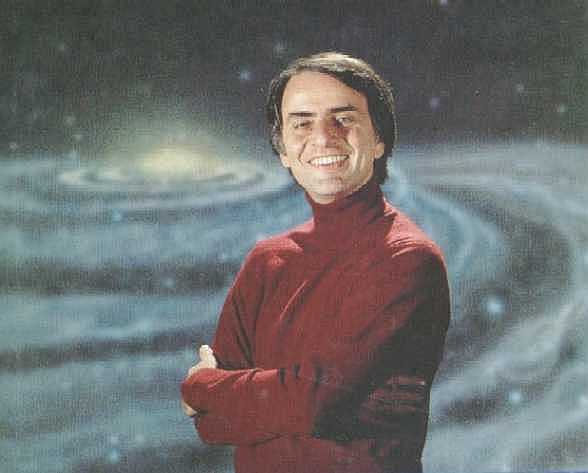
Carl Sagan - smarter than Asimov


Carl Sagan married three times:

1) the famous biologist, Lynn Margulis (mother of Dorion Sagan and Jeremy Sagan) in 1957

2) artist Linda Salzman (mother of Nick Sagan) in 1968

3) author Ann Druyan (mother of Sasha and Sam) in 1981, to whom he remained married until his death.

Isaac Asimov described Sagan as one of the only two people he ever met who were just plain smarter than Asimov himself.

The other was computer scientist and expert on artifical intelligence, Marvin Minsky.

Wednesday, August 09, 2006

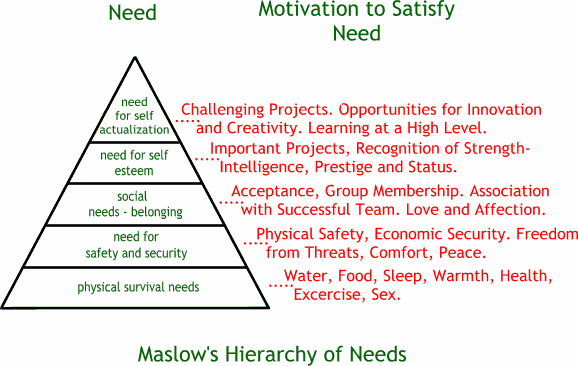
Abraham Maslow


Maslow's Hierarchy of Needs is a theory in psychology that Abraham Maslow proposed in his 1943 paper A Theory of Human Motivation, which he subsequently extended.

His theory contends that as humans meet 'basic needs', they seek to satisfy successively 'higher needs' that occupy a set hierarchy.

Maslow studied exemplary people such as Albert Einstein, Jane Adams, Elanore Roosevelt, and Fredrick Douglas rather than mentally ill or neurotic people, writing that "the study of crippled, stunted, immature, and unhealthy specimens can yield only a cripple psychology and a cripple philosophy." (Motivation and Personality, 1987)

From Wikipedia

Monday, July 03, 2006

Inner-ear mystery solved

14 March 2006
Belle Dumé is science writer at PhysicsWeb

Why is the cochlea in our ears shaped like a spiral? According to new work by scientists in the US, the spiral shape makes us more sensitive to low frequency sounds. Daphne Manoussaki of Vanderbilt University in Nashville, Tennessee, together with Emilios Dimitriadis and Richard Chadwick at the National Institutes of Health in Bethesda, Maryland, have calculated that the spiral shape can affect the wave mechanics that take place inside the cochlea. It increases the strength of vibrations produced by sound waves, especially at low pitch (Phys. Rev. Lett. 96 088701).

The cochlea is a small seashell-shaped organ in the inner part of the ear where sound vibrations are converted into nerve impulses. These are then sent to the brain as electrical signals. The human cochlea occupies a volume of about 1 cubic centimetre and operates at frequencies between 20 hertz and 20 kilohertz. It can detect sounds over a range of 120 decibels.

Scientists have long wondered whether the cochlea's coiled-up shape plays an important role in how it processes sound. Although intuition said it should, theoretical models did not support the idea. The new work by Manoussaki, who is an applied mathematician, and colleagues has now shown that the spiral shape probably increases hearing sensitivity to low frequency sounds by as much as 20 decibels.

When we hear something, the incoming sounds are transmitted via the tympanic membrane (or eardrum) to the basilar membrane, which runs along the length of the cochlea. The sound waves then cause the basilar membrane to vibrate. Manoussaki and co-workers looked at the equations that describe the mechanical interaction between this membrane and its surrounding fluid. In this way, they were able to describe how the amplitude of the membrane's movement changes across the width in each section of the spiral tube.

The scientists found that the spiral shape makes the membrane deflect more towards the outside of the cochlea wall and less towards the inside. This difference in the membrane's motion, which is effectively a tilt about a line running along its centre, increases with increasing radius of curvature and so enhances hearing sensitivity. "Since low frequency sounds are processed where the spiral curvature is greatest – at the apex of the cochlea - the effect will be more important for low-frequency sound waves," explains Manoussaki.

The spiral structure may have developed because animals use low-frequency sounds, which travel the furthest of all sound waves, for communication and survival. The US team will now try to confirm its results by comparing cochlea in different mammals.

Thursday, May 25, 2006

From the National Drug and Alcohol Research Centre

Many of you may have read the story this morning regarding ecstasy deaths, reported in the Daily Telegraph and the Herald Sun.

The opening paragraph claims the following: The party drug ecstasy is killing more than one person every fortnight nationwide, with almost a third of deaths occurring in car crashes.

As is often the case the story is not entirely accurate, so I would like to give you a little more information.

Unfortunately the Australian Bureau of Statistics (ABS) mortality register does not distinguish between ecstasy and other amphetamine type substances (ATS) related deaths. However, the National Coronial Information System (NCIS) does make this distinction, however these data are quite limited in the information they provide.

The NCIS defines a primary contribution as “producing the actual physical harm, most closely linked to the cause of death”, secondary contribution as “involved at the start of the injury event”, tertiary contribution as “other mechanisms involved in the injury event”.

If it is thought that drug use contributed to the risk of road traffic crashes, for example, it would be a secondary contribution; if the cause of death was drug toxicity or drug overdose and a drug was one of those detected, it would be implicated as one of the primary contributions to death (note that since ecstasy was usually one of a range of drugs detected, other drugs would also be classed as a primary contribution).

So what does the data tell us? Over the four year period 2001-2004, NCIS identified 112 ecstasy-related deaths. Although ecstasy was deemed to be a primary contributor in 51 (46%) of these, MDMA was the sole drug present in only six (5%) of these deaths. It is important to note that the majority of deaths were due to either a road traffic crash (RTC, 28%) or drug toxicity (40%).

Importantly, MDMA was rarely the only drug identified in drug toxicity deaths (3 of 45 deaths), and never the only drug in the overdose deaths. Some of the causes of the ecstasy-related deaths are particularly interesting and quite bizarre – three deaths were due to drowning, six were hangings and 8 were falls from a height!

Two implications of this data are firstly that death as a direct result of ecstasy consumption seems to be very rare in Australia compared to the extent of use, and ecstasy is usually only one of a range of drugs detected at death (a point that the newspapers chose to ignore!). Secondly, a substantial proportion of ecstasy-related deaths involve a motor vehicle accident. If you wish to read more about this, you will find the full PDI Bulletin (Kinner, Fowler, Fischer, et al (2005)) at the following location:


http://ndarc.med.unsw.edu.au/NDARCWeb.nsf/resources/BulletinsPDI_2005/$file/PDI+APRIL+2005.pdf

Paul Dillon
Manager
National Drug and Alcohol Research Centre
UNSW SYDNEY NSW 2052

Sunday, April 02, 2006

Prayer does not heal the sick, study finds

Praying for the health of strangers who have undergone heart surgery has no effect, according to the largest scientific study ever commissioned to calculate the healing power of prayer.

In fact, patients who know they are being prayed for suffer a noticeably higher rate of complications, according to the study, which monitored the recovery of 1,800 patients after heart bypass surgery in the US.

The findings of the decade-long study were due to be published in the American Heart Journal next week, but the journal published the report on its website yesterday as anticipation grew.

The power of intercessory prayer has been studied by doctors for years in America, but with no conclusive results. This $2.4 million study, funded in large part by the John Templeton Foundation, which seeks "insights at the boundary between theology and science", was intended to cast some clear light on the matter.

But the study "did not move us forward or backward" in understanding the effects of prayer, admitted Dr Charles Bethea, one of the co-authors and a cardiologist at the Integris Baptist Medical Center in Oklahoma City. "Intercessory prayer under our restricted format had a neutral effect," he said.

Members of three congregations - St. Paul's Monastery in St. Paul; the Community of Teresian Carmelites in Worcester, Massachussetts; and Silent Unity, a Missouri prayer ministry near Kansas City - were asked to pray for the patients, who were divided into three groups: those who would be told they were being prayed for, those who would receive prayers but not know, and those who would not be prayed for at all.

The worshippers starting praying for the patients the night before surgery and for the next two weeks, asking God to grant "a successful surgery with a quick, healthy recovery and no complications".

The study found no appreciable difference between the health of those who did not know they were being prayed for and those who received no prayers. Fifty-two per cent of patients in both groups suffered complications after surgery. But 59 per cent of those who knew they were prayed for went on to develop complications.

The reports authors said they had no explanation for the difference beyond a possibility that the prayers made people anxious about their ability to recover.

"Did the patients think, ’I am so sick that they had to call in the prayer team?"’ said Dr Bethea.

The results of the study provoked discord among doctors and scientists in the US, many of whom questioned the wisdom of subjecting prayer to the conditions of a research project.

Dr Richard Sloan, a professor of behavioral medicine at Columbia and the author of a forthcoming book, Blind Faith: The Unholy Alliance of Religion and Medicine, told The New York Times: "The problem with studying religion scientifically is that you do violence to the phenomenon by reducing it to basic elements that can be quantified, and that makes for bad science and bad religion."

But Paul Kurtz, Professor Emeritus of Philosophy at the State University of New York at Buffalo, and chairman of the Committee for the Scientific Investigation of Claims of the Paranormal, had a simpler response when asked why the study had found no evidence for the power of prayer. "Because there is none," he said. "That would be one answer."

Dr. David Stevens, executive director of the Christian Medical and Dental Associations, told the AP that he believed intercessory prayer could influence people's health, but that scientists were not equipped to measure the phenomenon."Do we control God through prayer? Theologians would say absolutely not. God decides sometimes to intervene, and sometimes not," he said. As for the new study, he said, "I don’t think... it’s going to stop people praying for the sick."

Monday, March 27, 2006

Scientists Find Skull of Human Ancestor


ADDIS ABABA, Ethiopia
Mar 25, 2006 (AP)

Scientists in northeastern Ethiopia said Saturday that they have discovered the skull of a small human ancestor that could be a missing link between the extinct Homo erectus and modern man.

The hominid cranium found in two pieces and believed to be between 500,000 and 250,000 years old "comes from a very significant period and is very close to the appearance of the anatomically modern human," said Sileshi Semaw, director of the Gona Paleoanthropological Research Project in Ethiopia.

Archaeologists found the early human cranium five weeks ago at Gawis in Ethiopia's northeastern Afar region, Sileshi said.

Several stone tools and fossilized animals including two types of pigs, zebras, elephants, antelopes, cats, and rodents were also found at the site.

Sileshi, an Ethiopian paleoanthropologist based at Indiana University, said most fossil hominids are found in pieces but the near-complete skull a rare find provided a wealth of information.
"The Gawis cranium provides us with the opportunity to look at the face of one of our ancestors," the archaeology project said in a statement.

Homo erectus, which many believe was an ancestor of modern Homo sapiens, is thought to have died out 100,000 to 200,000 years ago.

The cranium dates to a time about which little is known the transition from African Homo erectus to modern humans. The fossil record from Africa for this period is sparse and most of the specimens poorly dated, project archaeologists said.

The face and cranium of the fossil are recognizably different from those of modern humans, but bear unmistakable anatomical evidence that it belongs to the modern human's ancestry, Sileshi said.

"A good fossil provides anatomical evidence that allows us to refine our understanding of evolution. A great fossil forces us to re-examine our views of human origins. I believe the Gawis cranium is a great fossil," said Scott Simpson, a project paleontologist from Case Western Reserve University School of Medicine at Cleveland, Ohio.

Scientists conducting surveys in the Gawis River drainage basin found the skull in a small gully, the project statement said.

"This is really exciting because it joins a limited number of fossils which appear to be evolutionary between Homo erectus and our own species Homo sapiens," said Eric Delson, a paleoanthropologist at Lehman College of the City University of New York, who was not involved in the discovery but has followed the project.

Homo erectus left Africa about 2 million years ago and spread across Asia from Georgia in the Caucasus to China and Indonesia. It first appeared in Africa between 1 million and 2 million years ago.

Between 1 million and perhaps 200,000 years ago, one or more species existed in Africa that gave rise to the earliest members of our own species Homo sapiens between 150,000 and 200,000 years ago.

Delson said the fossil found in Ethiopia "might represent a population broadly ancestral to modern humans or it might prove to be one of several side branches which died out without living descendants."

On the Net:

Gona Palaeoanthropological Research Project Stone Age Institute:

http://www.stoneageinstitute.org

Wednesday, March 22, 2006

Plant, animal extinctions speeding up


By David Adam
March 22, 2006

HUMANS have provoked the worst series of extinctions since the dinosaurs were wiped out 65 million years ago, says a United Nations report that calls for unprecedented worldwide efforts to address the slide.

The report paints a grim picture of life on earth, with declining numbers of plants and animals, and warns that the current extinction rate is up to 1000 times faster than in the past. About 844 animals and plants are known to have disappeared in the past 500 years.

Released on Monday to mark the start of a UN environment program meeting in Curitiba, Brazil, the report says: "In effect, we are currently responsible for the sixth major extinction event in the history of earth."

A rising human population of 6.5 billion is wrecking the environment for thousands of other species, it adds, and undermining efforts agreed at a 2002 UN summit in Johannesburg to slow the rate of decline by 2010. The global demand for biological resources now exceeds the planet's capacity to renew them by 20 per cent.

The report, Global Biodiversity Outlook 2 from the UN Convention on Biological Diversity, says: "The direct causes of biodiversity loss - habitat change, over-exploitation, the introduction of invasive alien species, nutrient loading and climate change - show no sign of abating."

The Guardian, Reuters