Monster breaks off Tassie
September 22, 2006
SMH
Gale force winds have produced a massive 19.5-metre wave off the coast of Tasmania, according to surf forecasters.
The rogue wave was recorded about 9am (AEST) yesterday and is believed to be one of the largest ever measured in Australia, forecasters say.
Swellnet website forecaster Ben Matson said a waverider buoy located 10 kilometres from Cape Sorell, on Tasmania's west coast, recorded a wave peaking at a height of 19.5 metres (64 foot) as westerly winds crossed the coastline.
"It was probably a combination of several waves that all combined at the one time to produce this single enormous wave," he said.
"Large swells are common in the Southern Ocean at this time of year but wave heights of this magnitude are extremely rare."
Mr Matson said waves of that size had the potential to cause significant damage to ships and had been known to "send oil tankers to the bottom of the ocean" in other parts of the world.
Forecasters were currently examining old data but Mr Matson said the wave could be the largest ever measured in the country.
Saturday, September 23, 2006

Friday, September 22, 2006
Vampire Jet Car

The Vampire Jet Car weighs 2,200 lbs. The car is 30 feet long and drinks 7-10 gallons per mile of fuel.
It accelerates at 0-272 in six seconds and is powered by a Rolls Royce Orpheus jet engine.
The car is theoretically capable of 370mph.
Tuesday, September 19, 2006
First penis transplant comes unstuck
Ian Sample in London
September 19, 2006
A CHINESE man who had the world's first penis transplant had the organ removed two weeks later because he and his wife had a "severe psychological problem" with his new penis.
The man's penis was damaged beyond repair in an accident this year, leaving him with a one centimetre-long stump with which he was unable to urinate or have sexual intercourse.
"His quality of life was affected severely," said Dr Weilie Hu, a surgeon at Guangzhou General Hospital.
Doctors spent 15 hours attaching a 10-centimetre penis to the 44-year-old man after the parents of a brain-dead man half his age agreed to donate their son's organ.
The procedure, described in a case study due to appear in the journal European Urology next month, represents a big leap forward in transplant surgery.
After 10 days, tests revealed the organ had a rich blood supply and the man was able to urinate normally. Although the operation was a surgical success, surgeons said they had to remove the penis two weeks later.
"Because of a severe psychological problem of the recipient and his wife, the transplanted penis regretfully had to be cut off," Dr Hu said.
An examination of the organ showed no signs of it being rejected by the body, he said.
Jean-Michel Dubernard, the French surgeon who this year performed the world's first face transplant on a woman who had been attacked by a dog, said psychological factors were a serious issue for many patients receiving certain "allografts", or organs from donors.
"Psychological consequences of hand and face allografts show that it is not so easy to use and see permanently a dead person's hands, nor is it easy to look in a mirror to see a dead person's face," Dr Dubernard wrote in European Urology.
"Clearly, in the Chinese case the failure at a very early stage was first psychological. It involved the recipient's wife and raised many questions."
In 2001, surgeons were forced to amputate the world's first transplanted hand from Clint Hallam, a 50-year-old New Zealander, who said he wanted the "hideous and withered" hand removed because he had become "mentally detached" from it.
Andrew George, a transplant expert at Imperial College London, said: "Doing a penis transplant should be no more complex than anything else. But it takes time for nerve sensations to kick in and it's not clear whether the patient would ever be able to have sex with it."
The Guardian
September 19, 2006
A CHINESE man who had the world's first penis transplant had the organ removed two weeks later because he and his wife had a "severe psychological problem" with his new penis.
The man's penis was damaged beyond repair in an accident this year, leaving him with a one centimetre-long stump with which he was unable to urinate or have sexual intercourse.
"His quality of life was affected severely," said Dr Weilie Hu, a surgeon at Guangzhou General Hospital.
Doctors spent 15 hours attaching a 10-centimetre penis to the 44-year-old man after the parents of a brain-dead man half his age agreed to donate their son's organ.
The procedure, described in a case study due to appear in the journal European Urology next month, represents a big leap forward in transplant surgery.
After 10 days, tests revealed the organ had a rich blood supply and the man was able to urinate normally. Although the operation was a surgical success, surgeons said they had to remove the penis two weeks later.
"Because of a severe psychological problem of the recipient and his wife, the transplanted penis regretfully had to be cut off," Dr Hu said.
An examination of the organ showed no signs of it being rejected by the body, he said.
Jean-Michel Dubernard, the French surgeon who this year performed the world's first face transplant on a woman who had been attacked by a dog, said psychological factors were a serious issue for many patients receiving certain "allografts", or organs from donors.
"Psychological consequences of hand and face allografts show that it is not so easy to use and see permanently a dead person's hands, nor is it easy to look in a mirror to see a dead person's face," Dr Dubernard wrote in European Urology.
"Clearly, in the Chinese case the failure at a very early stage was first psychological. It involved the recipient's wife and raised many questions."
In 2001, surgeons were forced to amputate the world's first transplanted hand from Clint Hallam, a 50-year-old New Zealander, who said he wanted the "hideous and withered" hand removed because he had become "mentally detached" from it.
Andrew George, a transplant expert at Imperial College London, said: "Doing a penis transplant should be no more complex than anything else. But it takes time for nerve sensations to kick in and it's not clear whether the patient would ever be able to have sex with it."
The Guardian
Monday, September 18, 2006
Energy Polariser
ANDREW DENTON: I will move on to what was the low point in your career, which was the Energy Polarizer, which you brought out in the...
PETER BROCK: Yeah, that was an interesting thing, actually, because...
ANDREW DENTON: Can I just explain to those that don't know what it was, it was just a, it was a box...with magnets and crystals, which you said would turn even a dog of a car into a sweet-running one. And basically, the press turned on you as some kind of New-Age crank.
PETER BROCK: They did, but I must tell you that the only portion of crystal in that was a sliver of crystal, not unlike what you have in a wristwatch. So I wasn't exactly, you know, sleeping under pyramids and stuff like that.
ANDREW DENTON: Why did they turn on you?
PETER BROCK: I didn't have the ability to give them a suitable explanation as to why it worked.
ANDREW DENTON: And why not?
PETER BROCK: Too difficult, really. I mean, it was gonna cost me 750,000 dollars to get a scientific validation of it. And I didn't have it. I said, "Look, can you just trust the fact that it does work?" And most of the journalists said, "Yeah, this works good."
PETER BROCK: Yeah, that was an interesting thing, actually, because...
ANDREW DENTON: Can I just explain to those that don't know what it was, it was just a, it was a box...with magnets and crystals, which you said would turn even a dog of a car into a sweet-running one. And basically, the press turned on you as some kind of New-Age crank.
PETER BROCK: They did, but I must tell you that the only portion of crystal in that was a sliver of crystal, not unlike what you have in a wristwatch. So I wasn't exactly, you know, sleeping under pyramids and stuff like that.
ANDREW DENTON: Why did they turn on you?
PETER BROCK: I didn't have the ability to give them a suitable explanation as to why it worked.
ANDREW DENTON: And why not?
PETER BROCK: Too difficult, really. I mean, it was gonna cost me 750,000 dollars to get a scientific validation of it. And I didn't have it. I said, "Look, can you just trust the fact that it does work?" And most of the journalists said, "Yeah, this works good."
Tuesday, September 12, 2006
Fish aren't thick: scientist
David Braithwaite
September 12, 2006 SMH
Fish can be trained en masse and then used to train other fish
Watch this space ... "It's completely ridiculous that an animal could survive without a memory," says Dr Brown.
Having a memory like a goldfish could actually be a good thing, says a Sydney scientist who has spent 10 years proving fish are not as dumb as we think.
Fish are not the bowl-circling dimwits we imagine and could be as socially able as monkeys and elephants, Dr Culum Brown of Macquarie University says.
The biology lecturer has spent the past decade putting fish through learning and memory tests, which he says shows they are much deeper thinkers than they look.
For a start, Dr Brown says the three-second memory of goldfish is a myth: "It's completely ridiculous that an animal could survive without a memory."
Fish are so clever, Dr Brown says, that those schooled in survival skills can even teach their captivity-raised peers how to get by in the sea.
To help prove his theories, Dr Brown put rainbow fish into a tank with a mock trawler net with a single hole and watched how long it took them to find an escape route.
"Without any prior experience the fish learned where the hole was in about five runs," he says.
A year later, the same fish managed to find the hole on their first try, which Dr Brown says shows they easily recalled the skills they had learned.
In another study, Dr Brown scared intertidal gobies from a rock pool and as they dived for safety found they plopped precisely in surrounding pools.
"This suggests that fish are able to form mental maps similar to those people use when planning a route to a familiar destination," he says.
Dr Brown also studies "social learning" among fish, where fish trained to recognise predators and wild food teach captivity-bred fish how to survive.
"Fish can be trained en masse and then used to train other fish," he says.
"What we've found is the latter groups of fish learn more rapidly when ... placed with trained fish."
The research could prove useful to the aquaculture industry, Dr Brown says.
September 12, 2006 SMH
Fish can be trained en masse and then used to train other fish
Watch this space ... "It's completely ridiculous that an animal could survive without a memory," says Dr Brown.
Having a memory like a goldfish could actually be a good thing, says a Sydney scientist who has spent 10 years proving fish are not as dumb as we think.
Fish are not the bowl-circling dimwits we imagine and could be as socially able as monkeys and elephants, Dr Culum Brown of Macquarie University says.
The biology lecturer has spent the past decade putting fish through learning and memory tests, which he says shows they are much deeper thinkers than they look.
For a start, Dr Brown says the three-second memory of goldfish is a myth: "It's completely ridiculous that an animal could survive without a memory."
Fish are so clever, Dr Brown says, that those schooled in survival skills can even teach their captivity-raised peers how to get by in the sea.
To help prove his theories, Dr Brown put rainbow fish into a tank with a mock trawler net with a single hole and watched how long it took them to find an escape route.
"Without any prior experience the fish learned where the hole was in about five runs," he says.
A year later, the same fish managed to find the hole on their first try, which Dr Brown says shows they easily recalled the skills they had learned.
In another study, Dr Brown scared intertidal gobies from a rock pool and as they dived for safety found they plopped precisely in surrounding pools.
"This suggests that fish are able to form mental maps similar to those people use when planning a route to a familiar destination," he says.
Dr Brown also studies "social learning" among fish, where fish trained to recognise predators and wild food teach captivity-bred fish how to survive.
"Fish can be trained en masse and then used to train other fish," he says.
"What we've found is the latter groups of fish learn more rapidly when ... placed with trained fish."
The research could prove useful to the aquaculture industry, Dr Brown says.
Monday, September 11, 2006
Poor twice as likely to commit suicide
Julie Robotham Medical Editor
September 11, 2006
SMH
YOUNG adults from disadvantaged backgrounds are almost twice as likely to commit suicide as their more affluent peers, new research has found.
Despite overall reductions in suicides, the proportion of people from low socio-economic groups who took their lives between 1999 and 2003 rose more steeply than at any other period in the previous three decades, analysis by Richard Taylor, professor of population health at the University of Queensland, found.
"These aren't individual phenomena, these are group phenomena," Professor Taylor said.
"We've got to get beyond the psychiatric model … depression is not an answer. Depression is a question. We have got to look harder at what are the social and economic underpinnings of risk."
Suicide rates peaked in the late 1990s, when the wider use of anti-depressants and the introduction of a National Suicide Prevention Strategy began to turn around an increase that had persisted since the 1970s.
But Professor Taylor said these measures had been insufficient to save the lives of people lower down the income and education scales, who were increasingly priced out of the housing market and denied secure employment.
It was also possible that poorer people had less access to specialist mental health services and medications for their mood disorder and that mental health campaigns might be bypassing the most vulnerable people because their messages were "made by the middle class for the middle class".
Professor Taylor found suicides among 20- to 34-year-old men in the most disadvantaged one-fifth of the population had risen by 8 per cent in the five years from 1999 to 2003, compared with the preceding period, to 48.6 suicide deaths for every 100,000 people. That was nearly double the 27 per 100,000 of young men from the most affluent one-fifth of backgrounds, whose suicide rate fell by 15 per cent over the same period.
The analysis, published this week in the journal Social Psychiatry and Psychiatric Epidemiology, applied Australian Bureau of Statistics rankings of the relative socioeconomic status of small geographic areas to the addresses of people who had died by suicide.
September 11, 2006
SMH
YOUNG adults from disadvantaged backgrounds are almost twice as likely to commit suicide as their more affluent peers, new research has found.
Despite overall reductions in suicides, the proportion of people from low socio-economic groups who took their lives between 1999 and 2003 rose more steeply than at any other period in the previous three decades, analysis by Richard Taylor, professor of population health at the University of Queensland, found.
"These aren't individual phenomena, these are group phenomena," Professor Taylor said.
"We've got to get beyond the psychiatric model … depression is not an answer. Depression is a question. We have got to look harder at what are the social and economic underpinnings of risk."
Suicide rates peaked in the late 1990s, when the wider use of anti-depressants and the introduction of a National Suicide Prevention Strategy began to turn around an increase that had persisted since the 1970s.
But Professor Taylor said these measures had been insufficient to save the lives of people lower down the income and education scales, who were increasingly priced out of the housing market and denied secure employment.
It was also possible that poorer people had less access to specialist mental health services and medications for their mood disorder and that mental health campaigns might be bypassing the most vulnerable people because their messages were "made by the middle class for the middle class".
Professor Taylor found suicides among 20- to 34-year-old men in the most disadvantaged one-fifth of the population had risen by 8 per cent in the five years from 1999 to 2003, compared with the preceding period, to 48.6 suicide deaths for every 100,000 people. That was nearly double the 27 per 100,000 of young men from the most affluent one-fifth of backgrounds, whose suicide rate fell by 15 per cent over the same period.
The analysis, published this week in the journal Social Psychiatry and Psychiatric Epidemiology, applied Australian Bureau of Statistics rankings of the relative socioeconomic status of small geographic areas to the addresses of people who had died by suicide.
Generation Y's crime of their lives
Matthew Moore
September 11, 2006
SMH
ONE IN seven men born in NSW in 1984 had a criminal record by the time they turned 21, the first study of the proportion of generation Y members charged with a crime has found.
The study of all 81,784 people born in the state that year shows that 9.9 per cent of them were brought before a court before they turned 21, and virtually all of that 9.9 per cent were convicted of at least one offence.
About a third of these convictions were for drink-driving and other motor vehicle offences, 13 per cent were for theft and 10 per cent were for "acts intended to cause injury".
The study by NSW Bureau of Crime Statistics reveals that one in 200 people born in 1984 was sentenced to jail before their 21st birthday.
The director of the bureau, Don Weatherburn, said he was surprised such a big proportion of people had criminal records.
"It gives the lie to the proposition that criminals represent some tiny fraction of the community," he said.
As this study was the first of its type, Dr Weatherburn said he could not say whether the proportion of people with criminal records was likely to be different for people born in other years.
One brush with the law was enough for most, as 61 per cent of those who had records had only one appearance before the courts.
Seventy-two per cent of people who appeared before the courts did so after they turned 18.
A small number of people were responsible for a large number of court appearances: 9 per cent of the 9.9 per cent brought before a court appeared in court five times or more before they turned 21 and 2.3 per cent appeared in court 10 times or more.
As most people only offended once, Dr Weatherburn said, it was pointless "coming down hard" on them. He said resources should be allocated to the small group who committed most of the offences, because there were "enormous potential savings".
September 11, 2006
SMH
ONE IN seven men born in NSW in 1984 had a criminal record by the time they turned 21, the first study of the proportion of generation Y members charged with a crime has found.
The study of all 81,784 people born in the state that year shows that 9.9 per cent of them were brought before a court before they turned 21, and virtually all of that 9.9 per cent were convicted of at least one offence.
About a third of these convictions were for drink-driving and other motor vehicle offences, 13 per cent were for theft and 10 per cent were for "acts intended to cause injury".
The study by NSW Bureau of Crime Statistics reveals that one in 200 people born in 1984 was sentenced to jail before their 21st birthday.
The director of the bureau, Don Weatherburn, said he was surprised such a big proportion of people had criminal records.
"It gives the lie to the proposition that criminals represent some tiny fraction of the community," he said.
As this study was the first of its type, Dr Weatherburn said he could not say whether the proportion of people with criminal records was likely to be different for people born in other years.
One brush with the law was enough for most, as 61 per cent of those who had records had only one appearance before the courts.
Seventy-two per cent of people who appeared before the courts did so after they turned 18.
A small number of people were responsible for a large number of court appearances: 9 per cent of the 9.9 per cent brought before a court appeared in court five times or more before they turned 21 and 2.3 per cent appeared in court 10 times or more.
As most people only offended once, Dr Weatherburn said, it was pointless "coming down hard" on them. He said resources should be allocated to the small group who committed most of the offences, because there were "enormous potential savings".
Sunday, September 10, 2006
Peter Brock RIP


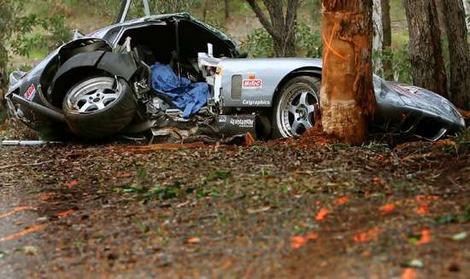
Australian motor racing legend Peter Brock has been killed in an accident while taking part in the Targa West rally in Western Australia, motor sport officials have confirmed.
He was driving a Daytona Coupe and died after hitting a gum tree, his co-driver Mick Hone survived the accident.
Go Swans !!

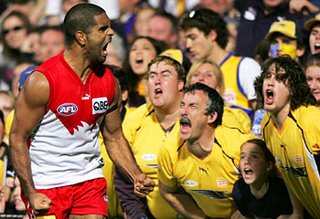 THE Sydney Swans advance to the preliminary final after a thrilling one-point win.
Michael O'Loughlin goaled with three minutes to go to win against the West Coast Eagles last night.
Thursday, September 07, 2006
WHO concerned by drug resistant strain of TB
The World Today - Thursday, 7 September , 2006
Reporter: Zoe Daniel
ELEANOR HALL: The World Health Organisation has released alarming findings about new strains of the disease tuberculosis, which it says are almost untreatable.In most Western countries TB is virtually non-existent but it's still highly prevalent in the third world. These virulent new strains have already infected people in the United States and Eastern Europe.And experts are meeting in South Africa to deal with a serious outbreak in the province of Kwa Zulu Natal, as Africa Correspondent Zoe Daniel reports.
ZOE DANIEL: It's feared that the Extreme Drug Resistant strain of TB was created by inappropriate use of TB medications. It's believed that TB resistance can be created by the use of drugs at the wrong dosage or for the wrong period of time.
Dr Paul Nunn from the World Health Organisation says the increasing prevalence of the drug resistant strain is a huge concern to health authorities.
PAUL NUNN: Well, the World Health Organisation is concerned because it's virtually or definitely untreatable. By definition this extreme drug resistance or XDR, as it's increasingly be called, is resistant to at least three of the six groups of second line drugs that are available. And by definition they're already resistant to the first line drugs. And so this means that any patient with XDR TB cannot get optimal treatment because we recommend that a patient with tuberculosis be treated with at least four drugs.
ZOE DANIEL: In South Africa an outbreak of drug resistant TB in Kwa Zulu Natal illustrates the extent of the problem. South Africa has the highest rate of HIV in the world, and tuberculosis is notorious for attacking the weakened immune systems of those who are HIV positive.However there was no treatment available when the drug resistant strain took hold, and the result for most was death.
PAUL NUNN: We carried out a survey that was published earlier this year showing the problem exists in about two per cent of cases globally. But what's most worrying is an outbreak recently reported from Kwa Zulu Natal showing that the XDR is there. That of the 53 patients that they looked at, 52 died within 210 days. So this is an extraordinarily high mortality rate. And clearly this is linked to the fact that all those tested were HIV infected as well. And this is the problem that we're really worried about. It's the spectre of extreme drug resistance fuelled by HIV in countries that don't really have the resources to address it right now.
ZOE DANIEL: At the moment TB causes about 1.7 million deaths per year around the world. But that's with the cocktail of drugs commonly used to treat it. Now resistance is showing up to the usual front line drugs and many of the so-called second line drugs that are used when the frontline drugs don't work.Dr Paul Nunn says part of the problem is that new drugs aren't coming onto the market because TB isn't present in most Western countries.
PAUL NUNN: During the 1980s and 1990s research into new anti-TB agents virtually disappeared in pharmaceutical companies because the TB problem was felt to be solved in the north and people did not realise the scale of the TB problem in developing countries at that time. And only in the last six or seven years has research really ramped up for new anti TB agents.The global alliance for anti TB drug development leading the fray, if you like, in New York funded largely by the Bill and Melinda Gates foundation. But clearly more investment in that area is required.
ZOE DANIEL: It's not yet clear how easily the drug resistant strain of TB is transmitted.
In Johannesburg, this is Zoe Daniel reporting for The World Today.
Reporter: Zoe Daniel
ELEANOR HALL: The World Health Organisation has released alarming findings about new strains of the disease tuberculosis, which it says are almost untreatable.In most Western countries TB is virtually non-existent but it's still highly prevalent in the third world. These virulent new strains have already infected people in the United States and Eastern Europe.And experts are meeting in South Africa to deal with a serious outbreak in the province of Kwa Zulu Natal, as Africa Correspondent Zoe Daniel reports.
ZOE DANIEL: It's feared that the Extreme Drug Resistant strain of TB was created by inappropriate use of TB medications. It's believed that TB resistance can be created by the use of drugs at the wrong dosage or for the wrong period of time.
Dr Paul Nunn from the World Health Organisation says the increasing prevalence of the drug resistant strain is a huge concern to health authorities.
PAUL NUNN: Well, the World Health Organisation is concerned because it's virtually or definitely untreatable. By definition this extreme drug resistance or XDR, as it's increasingly be called, is resistant to at least three of the six groups of second line drugs that are available. And by definition they're already resistant to the first line drugs. And so this means that any patient with XDR TB cannot get optimal treatment because we recommend that a patient with tuberculosis be treated with at least four drugs.
ZOE DANIEL: In South Africa an outbreak of drug resistant TB in Kwa Zulu Natal illustrates the extent of the problem. South Africa has the highest rate of HIV in the world, and tuberculosis is notorious for attacking the weakened immune systems of those who are HIV positive.However there was no treatment available when the drug resistant strain took hold, and the result for most was death.
PAUL NUNN: We carried out a survey that was published earlier this year showing the problem exists in about two per cent of cases globally. But what's most worrying is an outbreak recently reported from Kwa Zulu Natal showing that the XDR is there. That of the 53 patients that they looked at, 52 died within 210 days. So this is an extraordinarily high mortality rate. And clearly this is linked to the fact that all those tested were HIV infected as well. And this is the problem that we're really worried about. It's the spectre of extreme drug resistance fuelled by HIV in countries that don't really have the resources to address it right now.
ZOE DANIEL: At the moment TB causes about 1.7 million deaths per year around the world. But that's with the cocktail of drugs commonly used to treat it. Now resistance is showing up to the usual front line drugs and many of the so-called second line drugs that are used when the frontline drugs don't work.Dr Paul Nunn says part of the problem is that new drugs aren't coming onto the market because TB isn't present in most Western countries.
PAUL NUNN: During the 1980s and 1990s research into new anti-TB agents virtually disappeared in pharmaceutical companies because the TB problem was felt to be solved in the north and people did not realise the scale of the TB problem in developing countries at that time. And only in the last six or seven years has research really ramped up for new anti TB agents.The global alliance for anti TB drug development leading the fray, if you like, in New York funded largely by the Bill and Melinda Gates foundation. But clearly more investment in that area is required.
ZOE DANIEL: It's not yet clear how easily the drug resistant strain of TB is transmitted.
In Johannesburg, this is Zoe Daniel reporting for The World Today.
Wednesday, September 06, 2006
Yin and Yang

From Wikipedia
Taijitu, the traditional symbol representing the forces of Yin and Yang
The concepts of yin and yang originate in ancient Chinese philosophy and metaphysics, which describes two primal opposing but complementary forces found in all things in the universe.
Yin, is sad, the darker element, is passive, dark, feminine, downward-seeking, and corresponds to the night;
Yang, is happy, the brighter element, is active, light, masculine, upward-seeking and corresponds to the day;
Yin is often symbolized by water, while Yang is symbolized by fire.
The pair probably goes back to ancient agrarian religion; it exists in Confucianism, and it is prominent in Taoism.
Though the words yin and yang only appear once in theTeo Te Ching, the book is laden with examples and clarifications of the concept of mutual arising.
The concept is a fundamental principle of Traditional Chinese Medicine.
Yin and yang are descriptions of complementary opposites rather than absolutes.
Any yin/yang dichotomy can be seen as its opposite when viewed from another perspective.
Monday, September 04, 2006
"Crikey" - Steve Irwin killed by stingray
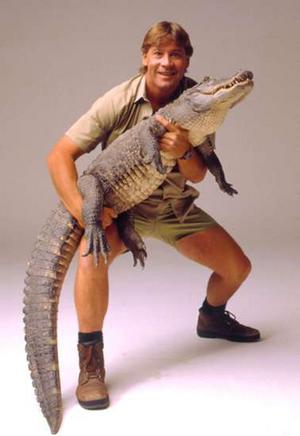
Crocodile man reported dead
September 4, 2006
Television personality and environmentalist Steve Irwin has died in a marine accident in north Queensland, state government sources say.
The 44-year-old is believed to have been killed by a stingray barb that went through his chest, the sources said.
He was filming an underwater documentary off Port Douglas when the accident occurred.
Mr Irwin's body was being flown to Cairns by helicopter.
Australian emergency officials could not immediately confirm the reports.
Irwin won a global following for his daredevil antics but also triggered outrage in 2004 by holding his then one-month-old baby while feeding a snapping crocodile at his Australian zoo.
It is believed his American-born wife Terri is trekking on Cradle Mountain in Tasmania.
Mr Irwin - known worldwide as the Crocodile Hunter - is famous for his enthusiasm for wildlife and his catchcry "Crikey!''.
The father of two's Crocodile Hunter program was first broadcast in 1992 and has been shown around the world on cable network Discovery.
AAP and SMH
Friday, September 01, 2006
Left or Right Pawed ???
Richard Macey
September 1, 2006
SMH
YOUR dog is inquisitive and loves exploring the neighbourhood. Or he is timid, nervous, and prefers sticking nearer to home.
His behaviour could be linked to his being left- or right-pawed.
And before you punt your wages on the next race at Randwick, it might be handy to know whether the horse, thanks to being left- or right-hoofed, prefers galloping clockwise, as they do in NSW, or anti-clockwise, as in Victoria.
There is growing evidence, says Paul McGreevy, a senior lecturer in the University of Sydney's Faculty of Veterinary Science, that behavioural traits in many animals, including dogs and horses, are linked to their handedness, or "laterality".
That animals have a preferred side has been accepted for almost 20 years. Now Dr McGreevy is conducting a three-year study, funded by the Australian Research Council, to explore "pawedness" in dogs.
His students have tested 270, giving them food cylinders and watching which paw they use to hold them steady. Repeating the experiment 100 times on each dog, they found about 15 per cent are left-pawed, 15 per cent right-pawed, and the rest are neither.
"Dogs that lack any bias are more likely to have noise phobias," Dr McGreevy said. "They get upset by thunderstorms and fireworks. If we can show laterality is a predictor of a dog's motivation or reluctance to explore, we can help guide dog and sniffer dog trainers select the right animals."
Knowing which side of a dog's brain is dominant could change pet training.
"There is a convention to train dogs on the left of the trainer. It's a human convention we have imposed, and it's unlikely to suit all dogs equally."
There appeared to be no differences in pawedness between breeds, but "males are more likely to be left than right, and females more likely to be right than left".
He has also confirmed "hoofedness" in racing horses. After watching 186 grazing in paddocks, observing whether they put their left or right hoofs forward as they ate, he found 40 per cent had a left preference, while 10 per cent had a right bias. The rest had none.
A horse might develop more powerful muscles on, for example, its right side, as a result of its hoofedness. It might thus excel on right curving tracks, but be disadvantaged going anti-clockwise.
That animals share the human trait of being left- or right-handed should not be surprising.
"It's evidence we all came from a common ancestor."
September 1, 2006
SMH
YOUR dog is inquisitive and loves exploring the neighbourhood. Or he is timid, nervous, and prefers sticking nearer to home.
His behaviour could be linked to his being left- or right-pawed.
And before you punt your wages on the next race at Randwick, it might be handy to know whether the horse, thanks to being left- or right-hoofed, prefers galloping clockwise, as they do in NSW, or anti-clockwise, as in Victoria.
There is growing evidence, says Paul McGreevy, a senior lecturer in the University of Sydney's Faculty of Veterinary Science, that behavioural traits in many animals, including dogs and horses, are linked to their handedness, or "laterality".
That animals have a preferred side has been accepted for almost 20 years. Now Dr McGreevy is conducting a three-year study, funded by the Australian Research Council, to explore "pawedness" in dogs.
His students have tested 270, giving them food cylinders and watching which paw they use to hold them steady. Repeating the experiment 100 times on each dog, they found about 15 per cent are left-pawed, 15 per cent right-pawed, and the rest are neither.
"Dogs that lack any bias are more likely to have noise phobias," Dr McGreevy said. "They get upset by thunderstorms and fireworks. If we can show laterality is a predictor of a dog's motivation or reluctance to explore, we can help guide dog and sniffer dog trainers select the right animals."
Knowing which side of a dog's brain is dominant could change pet training.
"There is a convention to train dogs on the left of the trainer. It's a human convention we have imposed, and it's unlikely to suit all dogs equally."
There appeared to be no differences in pawedness between breeds, but "males are more likely to be left than right, and females more likely to be right than left".
He has also confirmed "hoofedness" in racing horses. After watching 186 grazing in paddocks, observing whether they put their left or right hoofs forward as they ate, he found 40 per cent had a left preference, while 10 per cent had a right bias. The rest had none.
A horse might develop more powerful muscles on, for example, its right side, as a result of its hoofedness. It might thus excel on right curving tracks, but be disadvantaged going anti-clockwise.
That animals share the human trait of being left- or right-handed should not be surprising.
"It's evidence we all came from a common ancestor."
Wednesday, August 30, 2006
"Build a Brain" tutorial

Random Man says check out this link . . .
http://www.stanford.edu/group/hopes/basics/braintut/ab0.html
Star Trek's a thesis
By Adam Morton
August 28, 2006
The Age
It's the PhD thesis that boldly goes where no thesis has gone before. Djoymi Baker watched 700 episodes - 624 hours without ads - of Star Trek and its spin-offs, dating from 1966 to 2005, in the name of research.
She analysed the series armed with an exhaustive knowledge of the characters and storylines of ancient mythology - from Homer's Odyssey down.
It may sound like torture for those with an aversion to William Shatner's campy theatrics but, six years and 90,000 words on, it has earned Dr Baker a coveted chancellor's prize for excellence at Melbourne University. And the respect of academics and Trekkies alike.
"I was interested in where myths turn up in less obvious forms, and there wasn't much work on the early years of television and its relation to myth," Dr Baker said.
Importantly, she was also a fan of the series.
"I don't think just because a study is serious and that I'm connecting Star Trek to a broader history of TV and ancient myths that it means there is not also a fun side - I can see the fun side as well."
Among the dark corners where Dr Baker's thesis - titled Broadcast Space: TV Culture, Myth and Star Trek - shines light is the changing link between the starship Enterprise's intergalactic adventures and the real world's space race.
Shatner's monologues were inspired by the visionary speeches of JFK, advocating greater exploration. Thirty years on, the roles were reversed, with astronauts from the National Aeronautics and Space Administration guest-starring on Star Trek spin-offs to promote their underfunded existence.
Since finishing her thesis last year, the 34-year-old has had a daughter and is turning her thesis into an academic text.
She's also writing an introductory piece for a Star Trek exhibition at the Victorian College of the Arts in October.
August 28, 2006
The Age
It's the PhD thesis that boldly goes where no thesis has gone before. Djoymi Baker watched 700 episodes - 624 hours without ads - of Star Trek and its spin-offs, dating from 1966 to 2005, in the name of research.
She analysed the series armed with an exhaustive knowledge of the characters and storylines of ancient mythology - from Homer's Odyssey down.
It may sound like torture for those with an aversion to William Shatner's campy theatrics but, six years and 90,000 words on, it has earned Dr Baker a coveted chancellor's prize for excellence at Melbourne University. And the respect of academics and Trekkies alike.
"I was interested in where myths turn up in less obvious forms, and there wasn't much work on the early years of television and its relation to myth," Dr Baker said.
Importantly, she was also a fan of the series.
"I don't think just because a study is serious and that I'm connecting Star Trek to a broader history of TV and ancient myths that it means there is not also a fun side - I can see the fun side as well."
Among the dark corners where Dr Baker's thesis - titled Broadcast Space: TV Culture, Myth and Star Trek - shines light is the changing link between the starship Enterprise's intergalactic adventures and the real world's space race.
Shatner's monologues were inspired by the visionary speeches of JFK, advocating greater exploration. Thirty years on, the roles were reversed, with astronauts from the National Aeronautics and Space Administration guest-starring on Star Trek spin-offs to promote their underfunded existence.
Since finishing her thesis last year, the 34-year-old has had a daughter and is turning her thesis into an academic text.
She's also writing an introductory piece for a Star Trek exhibition at the Victorian College of the Arts in October.
Monday, August 28, 2006
Scorpions into the Grand Final !!

Lining up the the Scorpions at the SCG this sunday
Leo Barry (back)
Brett Kirk (centre)
Darren Jolly (ruck)
Michael O'Loughlin (forward)
Barry Hall (forward)
With Jason Roe and Trent Hentschel out with leg injuries and Josh Kennedy out with a punctured lung it is not going to be easy for the Scorpions. Hopefully Chris Tarrant is back this week. Fingers crossed !!
Fantastic effort from Matthew Richardson on the weekend (189 points).
Tuesday, August 22, 2006
Dark matter exists
By Robert Roy Britt
Monday, August 21, 2006
Scientists found proof of dark matter in galaxy cluster 1E0657-556
Harvard-Smithsonian Center for Astrophysics
National Aeronautics and Space Administration (NASA)
University of Arizona
New observations of a great big cosmic collision provide the best evidence yet that invisible and mysterious dark matter really does exist.
The collision, between two huge clusters of galaxies, is the "most energetic cosmic event, besides the Big Bang, that we know about," said Maxim Markevitch of the Harvard-Smithsonian Center for Astrophysics in Cambridge, Massachusetts.
The impact split normal matter and dark matter apart, rendering the dark matter's gravitational presence observable.
Scientists announced the discovery today in a teleconference with reporters.
The normal matter in the cosmos -- atoms that make up stars, planets, air and life -- accounts for only a small fraction of what must exist, based on the fact that without an additional source of gravity, galaxies would fly apart and galaxy clusters could not hold together as they do.
Nobody knows where all that gravity comes from, so scientists say there must be some invisible stuff out there, which they call dark matter. Its presence is indirectly supported by many observations.
Given what's known, this is the makeup of the universe:
5 percent normal matter
25 percent dark matter
70 percent dark energy
Dark energy is an even more mysterious phenomenon, a force of some sort that beats out gravity and is causing the universe to expand at an ever-faster pace.
Some theorists have suggested that rather than invoking dark matter, perhaps existing ideas about gravity might be wrong. Maybe gravity is stronger on intergalactic scales than what is predicted by Newton and Einstein.
And all astronomers agree that dark matter is such an exotic idea as to border on the crazy.
"A universe that's dominated by dark stuff seems preposterous, so we wanted to test whether there were any basic flaws in our thinking," said Doug Clowe of the University of Arizona at Tucson, and leader of the study. "These results are direct proof that dark matter exists."
Splitting matter
Clowe and colleagues used NASA's Chandra X-ray Observatory to study the galaxy cluster 1E0657-556, which contains a bullet-shaped cloud of superheated gas. X-rays show the shape was produced by cosmic winds created in a high-speed collision of two clusters of galaxies.
Other telescopes were used to locate and quantify the mass in the clusters. They actually measured the effect of gravitational lensing, in which gravity from the clusters distorts light from thousands of background galaxies, as predicted by Einstein's theory of general relativity.
The dark matter is not seen, but its gravity has a predictable effect on the observations. The resulting blue color in a new image represents the gravity fields observed by noting how the light from each background galaxy is distorted.
Here's what the image reveals:
The hot gas -- normal matter -- was slowed by a drag force described as the cosmic equivalent of air resistance. But the dark matter was not slowed by this effect, presumably because it does not interact with normal matter, as theory had predicted.
So the normal matter and dark matter became separated.
"This proves in a simple and direct way that dark matter exists." Markevitch said in the teleconference.
Other theories must cope
The finding provides further evidence that standard Newtonian gravity, which keeps planets in orbit around the sun, is the glue that makes things stick on the largest scales, too.
It is still possible there is some modification of gravity going on, but these findings make it less necessary to have such theories, said Sean Carroll, a cosmologist at the University of Chicago who was not involved with the study. "No matter what you do [in devising new theories] you're going to have to believe in dark matter."
"We've closed this loophole about gravity, and we've come closer than ever to seeing this invisible matter," Clowe said. "This is the first time we've had a direct detection of dark matter" in which you can't explain the results with any altered-gravity theory, he said.
The findings will be detailed in an upcoming issue of the Astrophysical Journal Letters.
Monday, August 21, 2006
Scientists found proof of dark matter in galaxy cluster 1E0657-556
Harvard-Smithsonian Center for Astrophysics
National Aeronautics and Space Administration (NASA)
University of Arizona
New observations of a great big cosmic collision provide the best evidence yet that invisible and mysterious dark matter really does exist.
The collision, between two huge clusters of galaxies, is the "most energetic cosmic event, besides the Big Bang, that we know about," said Maxim Markevitch of the Harvard-Smithsonian Center for Astrophysics in Cambridge, Massachusetts.
The impact split normal matter and dark matter apart, rendering the dark matter's gravitational presence observable.
Scientists announced the discovery today in a teleconference with reporters.
The normal matter in the cosmos -- atoms that make up stars, planets, air and life -- accounts for only a small fraction of what must exist, based on the fact that without an additional source of gravity, galaxies would fly apart and galaxy clusters could not hold together as they do.
Nobody knows where all that gravity comes from, so scientists say there must be some invisible stuff out there, which they call dark matter. Its presence is indirectly supported by many observations.
Given what's known, this is the makeup of the universe:
5 percent normal matter
25 percent dark matter
70 percent dark energy
Dark energy is an even more mysterious phenomenon, a force of some sort that beats out gravity and is causing the universe to expand at an ever-faster pace.
Some theorists have suggested that rather than invoking dark matter, perhaps existing ideas about gravity might be wrong. Maybe gravity is stronger on intergalactic scales than what is predicted by Newton and Einstein.
And all astronomers agree that dark matter is such an exotic idea as to border on the crazy.
"A universe that's dominated by dark stuff seems preposterous, so we wanted to test whether there were any basic flaws in our thinking," said Doug Clowe of the University of Arizona at Tucson, and leader of the study. "These results are direct proof that dark matter exists."
Splitting matter
Clowe and colleagues used NASA's Chandra X-ray Observatory to study the galaxy cluster 1E0657-556, which contains a bullet-shaped cloud of superheated gas. X-rays show the shape was produced by cosmic winds created in a high-speed collision of two clusters of galaxies.
Other telescopes were used to locate and quantify the mass in the clusters. They actually measured the effect of gravitational lensing, in which gravity from the clusters distorts light from thousands of background galaxies, as predicted by Einstein's theory of general relativity.
The dark matter is not seen, but its gravity has a predictable effect on the observations. The resulting blue color in a new image represents the gravity fields observed by noting how the light from each background galaxy is distorted.
Here's what the image reveals:
The hot gas -- normal matter -- was slowed by a drag force described as the cosmic equivalent of air resistance. But the dark matter was not slowed by this effect, presumably because it does not interact with normal matter, as theory had predicted.
So the normal matter and dark matter became separated.
"This proves in a simple and direct way that dark matter exists." Markevitch said in the teleconference.
Other theories must cope
The finding provides further evidence that standard Newtonian gravity, which keeps planets in orbit around the sun, is the glue that makes things stick on the largest scales, too.
It is still possible there is some modification of gravity going on, but these findings make it less necessary to have such theories, said Sean Carroll, a cosmologist at the University of Chicago who was not involved with the study. "No matter what you do [in devising new theories] you're going to have to believe in dark matter."
"We've closed this loophole about gravity, and we've come closer than ever to seeing this invisible matter," Clowe said. "This is the first time we've had a direct detection of dark matter" in which you can't explain the results with any altered-gravity theory, he said.
The findings will be detailed in an upcoming issue of the Astrophysical Journal Letters.
Monday, August 21, 2006
Good win for the Scorpions

Sydney_Scorpions def Happy Hermits to move into the 2nd Prelim. Final against The Rock Bottoms this coming weekend.
With Tarrant back, the Scorpions are at full strength (hopefully).
Can they take down the UN Peacekeepers in the Grand Final ?
Will need a better game from Hall and Gehrig for starters.
Fingers Crossed.
Sunday, August 20, 2006
Abbott lashes out at scientists
August 20, 2006
Scientists are "peddling" hopes of medical breakthroughs without convincing evidence that expanding stem cell research will deliver, Health Minister Tony Abbott says.
Mr Abbott, who is strongly opposed to therapeutic cloning, today lashed out at "evangelical" scientists, accusing them of giving false hopes to sufferers of crippling diseases just to get "a leg up" in their research.
The comments were some of Mr Abbott's strongest on the issue as MPs and senators head towards a conscience vote on overturning the four year ban on therapeutic cloning - the creation of embryos to produce stem cells.
Labor's health spokeswoman Julia Gillard today called for calm and accused the minister of misleading the public.
Mr Abbott's language, she said, "is calculated in my view to misinform the public and to misrepresent this debate".
"I think Tony Abbott as health minister has actually got an obligation to keep the debate calm and keep it focussed on the facts," Ms Gillard told the Ten Network.
"Instead he believes it's his job to run in with the most inflammatory language he can think of.
"No one in federal parliament is advocating human cloning, that is the complete reproduction of human beings."
But the pro-life minister, a devout Catholic, said politicians were being asked to cross a bridge too far.
"People are asking us to cross a very serious ethical bridge for no good reason because there is no strong evidence that this kind of research is actually going to produce the massive breakthroughs that people are claiming," Mr Abbott told ABC television.
"I think what we are seeing at the moment is a lot of peddling of hope, but no great evidence that these new and radical research techniques are actually going to produce the breakthroughs that some of the more evangelical scientists are claiming for them."
Mr Abbott said MPs and senators needed to explain what had changed since parliament voted in 2002 not to allow therapeutic cloning.
He made it clear that he did not trust scientists to steer the debate, saying they would want "a little bit more human cloning in a few years' time".
"Even potential human life needs to be treated with great respect and we shouldn't be willy-nilly creating potential human life just to satisfy the urges of the scientific community," Mr Abbott said.
Two senators are preparing private members' bills intended to end the ban on therapeutic cloning - Australian Democrat Natasha Stott Despoja and Liberal Kay Patterson, a former health minister.
Senator Patterson plans to base the bill on the findings of the expert Lockhart review, which recommended the Government allow scientists to conduct embryonic stem cell research.
Present laws restrict research to spare IVF embryos.
Mr Abbott said he believed a large number of MPs and senators remained undecided on the issue, but acknowledged the influence of the Lockhart report.
"I certainly think the Lockhart review has had an impact on people but I think that the more people think about this the more concerned they will be about just where this might be leading," he said.
Cabinet rejected the Lockhart review's recommendation in June, but Prime Minister John Howard last week bowed to backbench pressure and promised his MPs a conscience vote should any legislation come to parliament.
AAP
Scientists are "peddling" hopes of medical breakthroughs without convincing evidence that expanding stem cell research will deliver, Health Minister Tony Abbott says.
Mr Abbott, who is strongly opposed to therapeutic cloning, today lashed out at "evangelical" scientists, accusing them of giving false hopes to sufferers of crippling diseases just to get "a leg up" in their research.
The comments were some of Mr Abbott's strongest on the issue as MPs and senators head towards a conscience vote on overturning the four year ban on therapeutic cloning - the creation of embryos to produce stem cells.
Labor's health spokeswoman Julia Gillard today called for calm and accused the minister of misleading the public.
Mr Abbott's language, she said, "is calculated in my view to misinform the public and to misrepresent this debate".
"I think Tony Abbott as health minister has actually got an obligation to keep the debate calm and keep it focussed on the facts," Ms Gillard told the Ten Network.
"Instead he believes it's his job to run in with the most inflammatory language he can think of.
"No one in federal parliament is advocating human cloning, that is the complete reproduction of human beings."
But the pro-life minister, a devout Catholic, said politicians were being asked to cross a bridge too far.
"People are asking us to cross a very serious ethical bridge for no good reason because there is no strong evidence that this kind of research is actually going to produce the massive breakthroughs that people are claiming," Mr Abbott told ABC television.
"I think what we are seeing at the moment is a lot of peddling of hope, but no great evidence that these new and radical research techniques are actually going to produce the breakthroughs that some of the more evangelical scientists are claiming for them."
Mr Abbott said MPs and senators needed to explain what had changed since parliament voted in 2002 not to allow therapeutic cloning.
He made it clear that he did not trust scientists to steer the debate, saying they would want "a little bit more human cloning in a few years' time".
"Even potential human life needs to be treated with great respect and we shouldn't be willy-nilly creating potential human life just to satisfy the urges of the scientific community," Mr Abbott said.
Two senators are preparing private members' bills intended to end the ban on therapeutic cloning - Australian Democrat Natasha Stott Despoja and Liberal Kay Patterson, a former health minister.
Senator Patterson plans to base the bill on the findings of the expert Lockhart review, which recommended the Government allow scientists to conduct embryonic stem cell research.
Present laws restrict research to spare IVF embryos.
Mr Abbott said he believed a large number of MPs and senators remained undecided on the issue, but acknowledged the influence of the Lockhart report.
"I certainly think the Lockhart review has had an impact on people but I think that the more people think about this the more concerned they will be about just where this might be leading," he said.
Cabinet rejected the Lockhart review's recommendation in June, but Prime Minister John Howard last week bowed to backbench pressure and promised his MPs a conscience vote should any legislation come to parliament.
AAP
Carl Sagan - smarter than Asimov
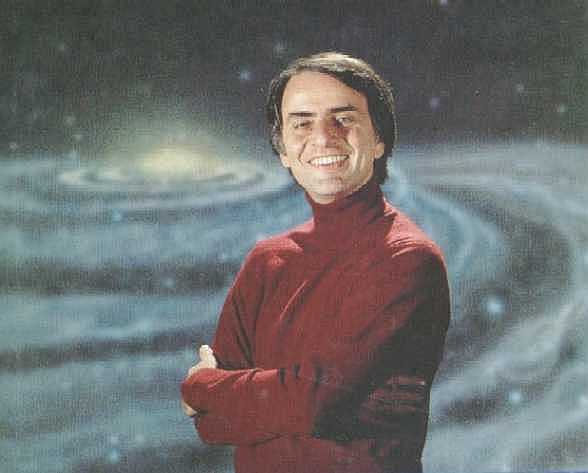
Carl Sagan married three times:
1) the famous biologist, Lynn Margulis (mother of Dorion Sagan and Jeremy Sagan) in 1957
2) artist Linda Salzman (mother of Nick Sagan) in 1968
3) author Ann Druyan (mother of Sasha and Sam) in 1981, to whom he remained married until his death.
Isaac Asimov described Sagan as one of the only two people he ever met who were just plain smarter than Asimov himself.
The other was computer scientist and expert on artifical intelligence, Marvin Minsky.
Subscribe to:
Posts (Atom)